
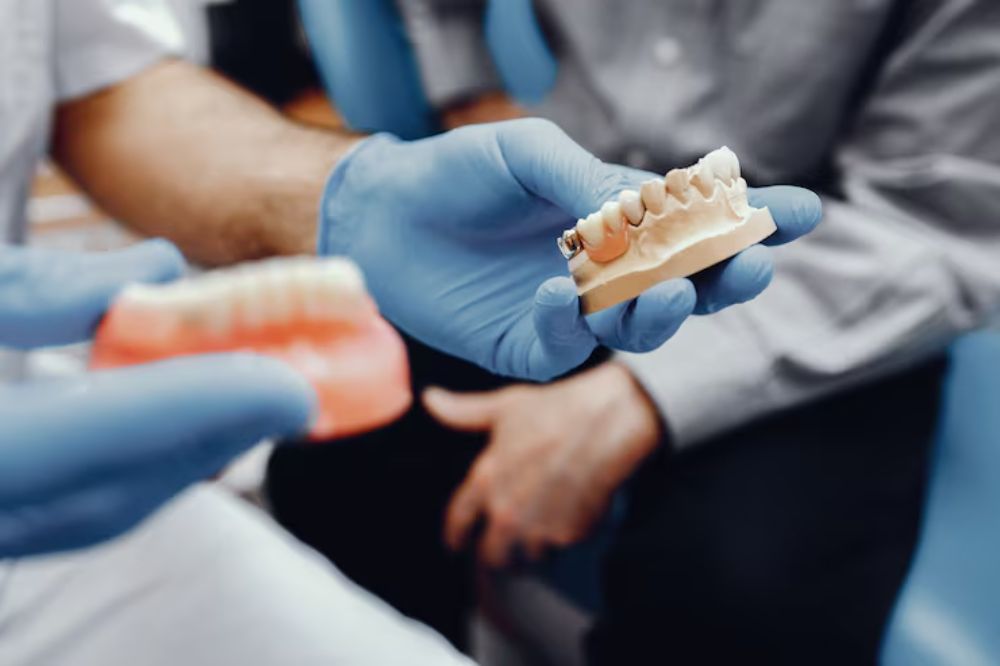
If you have lost teeth and you are wondering which restoration option is right for you. Dental bridges in Lawrenceville give restoration of your smile in a fixed and natural way. So that’s something you can choose if you want to improve your smile. Dental bridges are a great way to replace missing teeth while maintaining your bite, alignment, and confidence.
What is a Dental Bridge?
A dental bridge is a type of tooth replacement bridge that fills the gap where a tooth has gone missing. A dental bridge includes a number of artificial teeth, which are either implants or crowns attached to the surrounding teeth.
Dental bridges can.
- Restore your ability to chew and speak properly
- Maintain the shape of your face
- Prevent shifting of nearby teeth
- Improve smile aesthetics
With proper care, this straightforward yet durable restoration can serve you for years while restoring comfort and confidence to your smile.
When Do You Need a Dental Bridge?
A dental bridge is often recommended when.
- You have one or more missing teeth in a row.
- The teeth next to the gap are healthy enough to bridge.
- You want a fixed alternative to removable dentures.
- You prefer a quicker process than dental implants.
Your oral health will be assessed by your dentist in Lawrenceville, who will recommend the best option for your needs—a bridge, an implant, or a partial denture.
Different Types of Dental Bridges
There are different types of bridges that you can choose from, based on your teeth and what you like.
- Traditional Bridge—The bridge is held by two crowns, one on each side of the gap.
- Cantilever Bridge – The bridge is connected to only one neighboring tooth.
- Maryland Bridge—The bridge has metal or porcelain parts that are glued to the back of the closest teeth.
- Implant-Supported Bridge – The bridge is fixed with the help of implants for utmost firmness.
You can decide which one to use based on how many teeth you have lost, the condition of your bone, and your dental care plan for the future.
Benefits of Getting a Bridge for Teeth
Several benefits are associated with the decision to use a bridge for teeth.
- Brings back the full function of chewing
- It prevents the teeth that are adjacent to the spaces from drifting.
- Helps to regulate the bite
- Makes the smile look better
- Gives a solution that is stable and can’t be taken out
Bridges become excellent intermediate compromise solutions between removable dentures and permanent implants.
How to Care for Your Dental Bridge
It’s easy to take care of your bridge just like your natural teeth. Here are a few tips.
- Brush twice daily using a soft-bristle toothbrush.
- Floss under the bridge using a floss threader.
- Rinse with an antibacterial mouthwash.
- Make regular visits to your nearby dentist for your checkup.
If you take good care of your bridge, you will be strong, comfortable, and working properly for many years to come.
Who Is a Good Candidate for a Dental Bridge?
You may be a suitable candidate if you.
- Have one to three missing teeth in a row.
- Maintain healthy gums and supporting teeth.
- Prefer a fixed restoration option.
- Want to avoid lengthy implant surgery.
Your dental professional will check your mouth and will prepare a personal treatment plan.
Rebuild Your Smile with Confidence!
If your comfort or confidence is being compromised by insufficient teeth, you ought to look at the different possibilities. Get in touch with Choice One Dental to book your consultation and find out in what way a dental bridge can make your smile healthy again and keep its natural look.
FAQs
How long is the process of getting a dental bridge?
As a rule, it takes 2-3 visits spread over a few weeks.
Do dental bridges cause pain?
The operation is performed under local anesthesia, so the pain is minimized.
How long does a bridge last?
With good care, most bridges last 10–15 years or longer.
Can I eat normally with a bridge?
Their meal will get digested without any feeling of discomfort.
📍Easily Navigate to Our Dental Office via Google Maps.